English games default to American 8-ball. This guide covers breaks, group assignment, turns and winning shots, with diagrams for disputed situations. These are this site's rules, not the full WPA tournament rules; check the site-specific differences before playing.
Shot Results and Turns
Continue unless the shot has already decided the rack.
After a legal turn change, play from the cue ball's position. A foul gives ball in hand.
Apply the selected ruleset. In either 8-ball game, the 8 is spotted if made on the break.
Check a Shot in This Order
- Identify the legal first-contact ball.
- Wait until all balls stop.
- Check fouls before awarding a win.
- If the rack continues, determine whose turn it is.
- With ball in hand, place the cue ball before aiming.
Four Rulesets Compared
| Ruling | American 8-ball | Chinese 8-ball | 9-ball | 10-ball |
|---|---|---|---|---|
| Object balls | 1-15: solids and stripes | 1-15: solids and stripes | 1-9: no groups | 1-10: no groups |
| First contact | Your group; then the 8 | Your group; then the 8 | Lowest ball remaining | Lowest ball remaining |
| Break foul | Ball in hand anywhere | Behind the head string | Ball in hand anywhere | Ball in hand anywhere |
| Win | Clear your group and legally pocket the 8 | Clear your group, then pocket the 8 on a separate shot | Legally pocket the 9 | Legally pocket the 10 |
| Winning ball on break | Spot the 8; rack continues | Spot the 8; rack continues | Win if no foul | Win if no foul |
| Last group ball and 8 on one shot | Win if group cleared and shot legal | Loss | Not applicable | Not applicable |
Neither 8-ball game assigns groups on the break. Open-table first contact is explained below. All four games give ball in hand anywhere after a regular foul; only a Chinese 8-ball break foul restricts placement.
First Contact, Rails and the Break
The cue ball is the white ball and the only ball you strike directly. Numbered balls are object balls. A rail contact means a ball hits a cushion. In rotation games, the lowest ball is the lowest number still on the table. Rulings are final once every ball stops.
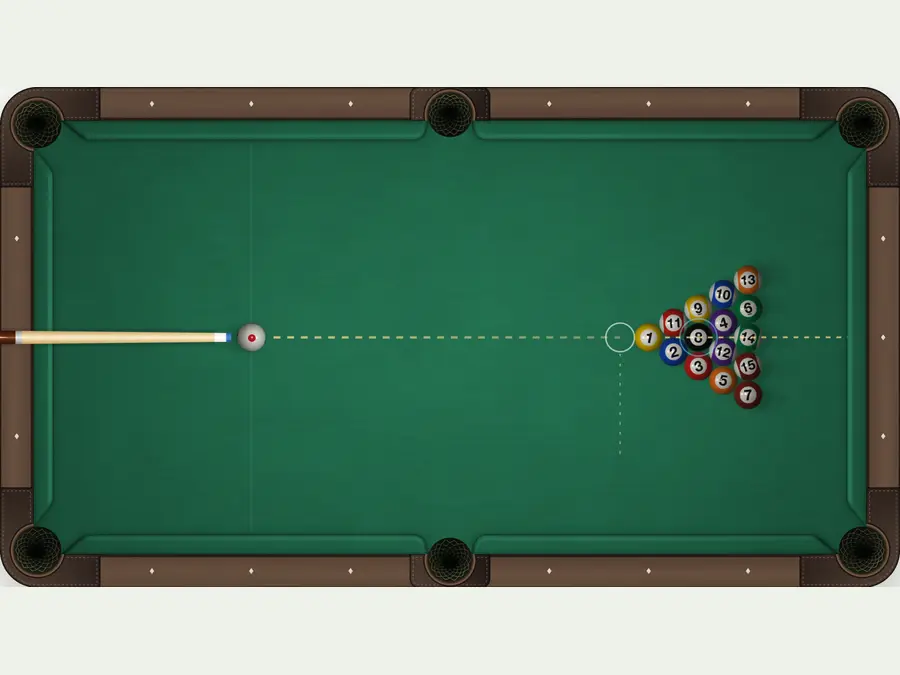
Contact order is not pocketing order
First contact is the first object ball the cue ball hits, not the first ball pocketed. A kick shot may hit a rail before reaching the legal object ball. Hitting the wrong object ball first is still a foul even if a valid target later drops.
On a regular shot with no object ball pocketed, the cue ball or any object ball must reach a rail after legal first contact. A rail hit before contact does not count. Pocketing an object ball removes the rail requirement, but does not excuse wrong first contact or a scratch.
What makes a legal break
All four games break from behind the head string. Pocket an object ball or send at least four different object balls to rails, with legal first contact and no scratch. The cue ball does not count toward the four, and repeated rail hits by one object ball count only once.
A legal break with a ball pocketed keeps the breaker's turn unless the rack is won. A legal dry break passes play to the opponent from the cue ball's position. No pot and fewer than four object balls reaching rails is a break foul; ball-in-hand placement follows the selected game.
American 8-Ball: Groups and the 8
This is the English default. Solids are 1-7; stripes are 9-15. Rack fifteen balls in a triangle with the 8 in the center of the third row and one solid and one stripe at the rear corners. This site does not require called shots.
The 8 on the break
Pocketing the 8 on the break is neither a win nor a loss: spot it and continue. Without a foul, the breaker shoots again, even if only the 8 dropped. A break foul gives the opponent ball in hand anywhere, including when the 8 must first be spotted.
How solids and stripes are assigned
The table stays open after the break. Hit a solid or stripe first, not the 8, unless only the 8 remains. On the first legal scoring shot after the break, the first solid or stripe pocketed assigns your group; the opponent gets the other.
If both groups drop on that shot, the first ball pocketed decides the group, not first contact, total pots or a player choice. A foul does not assign groups. If only the 8 remains on an open table, either player may legally pocket it to win.
Keeping your turn
While your group remains, hit one of your own balls first. Legally pocket at least one of yours to continue. Pocketing only the opponent's ball is not itself a foul, but passes the turn. If both groups drop legally, keep shooting; the opponent's pocketed balls stay down.
Winning and losing on the 8
With your group already cleared, hit the 8 first and pocket it without a foul to win.
This site's American 8-ball also allows the last group ball and the 8 on one legal shot: hit your group first and pocket all your remaining group balls and the 8. Their pocketing order does not matter. Hitting the 8 first while your group remains is a foul and loses if the 8 drops.
Outside the break, pocketing the 8 while leaving any group ball up, or pocketing the 8 on a foul, loses. A scratch with the 8 still on the table is an ordinary foul, not an automatic loss. This same-shot finish differs from common tournament rules.
Chinese 8-Ball: Two Important Differences
The rack, open table, group assignment and regular-shot continuation work as described for American 8-ball. Chinese 8-ball changes break-foul placement and requires a separate final shot on the 8.
Break fouls stay behind the head string
After a break foul, the opponent places the cue ball behind the head string. A regular foul later in the rack gives ball in hand anywhere. The 8 is still spotted if made on the break; a legal break keeps the breaker's turn, even when only the 8 drops.
Clear your group before shooting the 8
Your group must already be completely pocketed before the shot on the 8 begins. Hit the 8 first and pocket it without a foul to win.
Outside the break, pocketing your last group ball and the 8 on the same shot loses, regardless of which drops first. Pocketing the 8 early or on a foul also loses. If the 8 stays up, an ordinary foul gives the opponent ball in hand, not a win.
On an open table with only the 8 remaining, either player may hit it first and legally pocket it to win. An 8 made on the break follows the spotting rule, not these loss conditions.
9-Ball: Lowest First, Not Lowest Pocketed
Rack balls 1-9 in a diamond, with the 1 at the apex and the 9 in the center. There are no solids or stripes. Each shot must contact the lowest-numbered ball remaining first, but balls need not be pocketed in order.
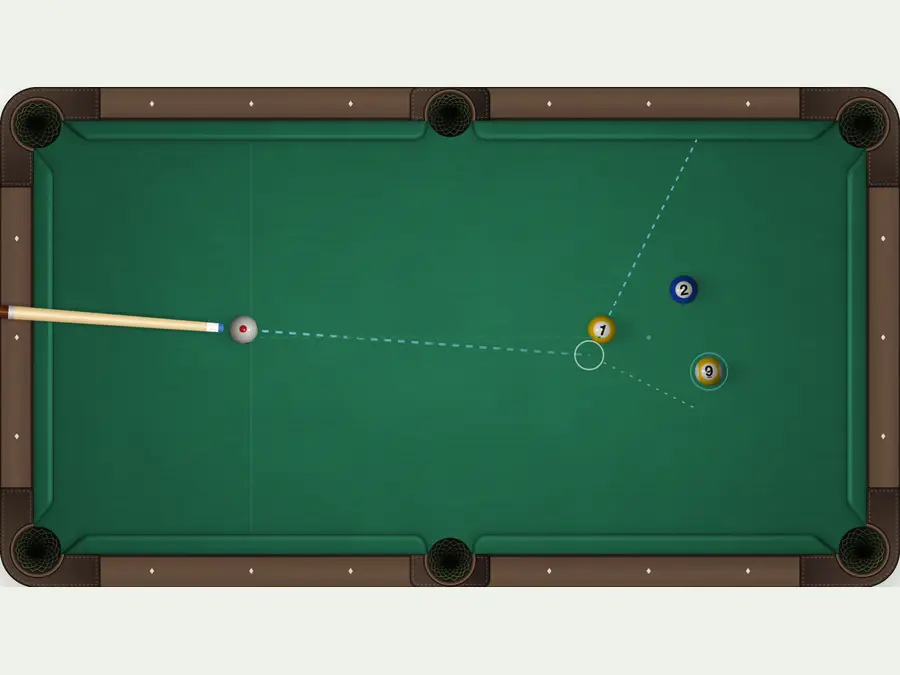
Breaking on the 1
The break must hit the 1 first and meet the common pot-or-four-rails requirement. A legal 9 on the break wins. A break foul gives the opponent ball in hand anywhere.
Combinations and continuation
After the cue ball hits the lowest ball, that ball may contact another ball and pocket it: this is a combination. Any legal object-ball pot keeps your turn. A legal 9 wins without clearing the others. Identify the lowest remaining ball again before the next shot.
The 9 pocketed on a foul
A 9 made on a foul is spotted, not awarded as a win. The opponent gets ball in hand anywhere; other pocketed object balls stay down.
10-Ball: No Called Shots on This Site
Rack balls 1-10 in a triangle, with the 1 at the apex and the 10 in the center of the third row. Hit the lowest-numbered ball remaining first on every shot.
The 10 is the winning ball
First contact, legal breaks, continuation and ball in hand follow the same conditions as 9-ball. A legal 10 wins, including on a combination or the break. A 10 pocketed on a foul is spotted and the opponent gets ball in hand anywhere.
How this differs from tournament 10-ball
You do not call a ball or pocket, and you do not have to clear 1-9 before pocketing the 10. These conditions differ from call-shot events where the 10 made on the break is spotted. Use the rules of the event when playing elsewhere.
Fouls and Ball in Hand
Check fouls before pots and turns. A scratch or wrong first contact remains a foul even if an object ball drops. A legal miss simply passes the turn, leaving the cue ball where it stopped.
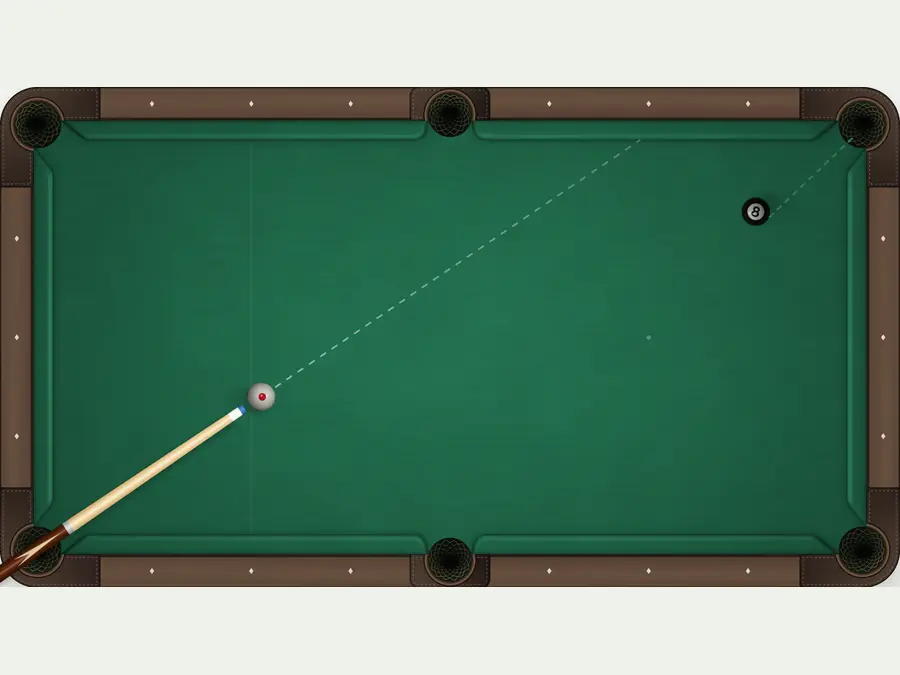
Four common fouls
Scratch: the cue ball enters any pocket.
No object-ball contact: the cue ball hits no object ball, even if it reaches a rail.
Wrong first contact: in assigned 8-ball, hit the opponent's group first, or the 8 while your group remains. On an open table, the 8 cannot be hit first unless it is the only object ball left. In 9-ball and 10-ball, first contact on anything except the lowest ball fouls. The 8-ball break is not restricted by group.
Insufficient rail contact: on a regular shot, no object ball drops and no ball reaches a rail after first contact; on the break, no ball drops and fewer than four different object balls reach rails.
Placement and spotting
With ball in hand, drag the cue ball to a legal position inside the table without overlapping another ball. Full-table placement includes both sides of the head string. Only a Chinese 8-ball break foul limits placement to behind it. No placement follows an 8-ball loss: the rack is over.
Ordinary object balls stay pocketed, including on fouls. Spot the 8 made on a break, or the 9 or 10 made on a foul. If the spot is occupied, use an available position along the table's centerline.
Three Rulings Illustrated
Table images show key positions with guide lines. The steps below show event order, not a measured path or distance.
A Rail Before Contact Is Not Enough
A regular shot: the 2 is a legal target and no object ball is pocketed.
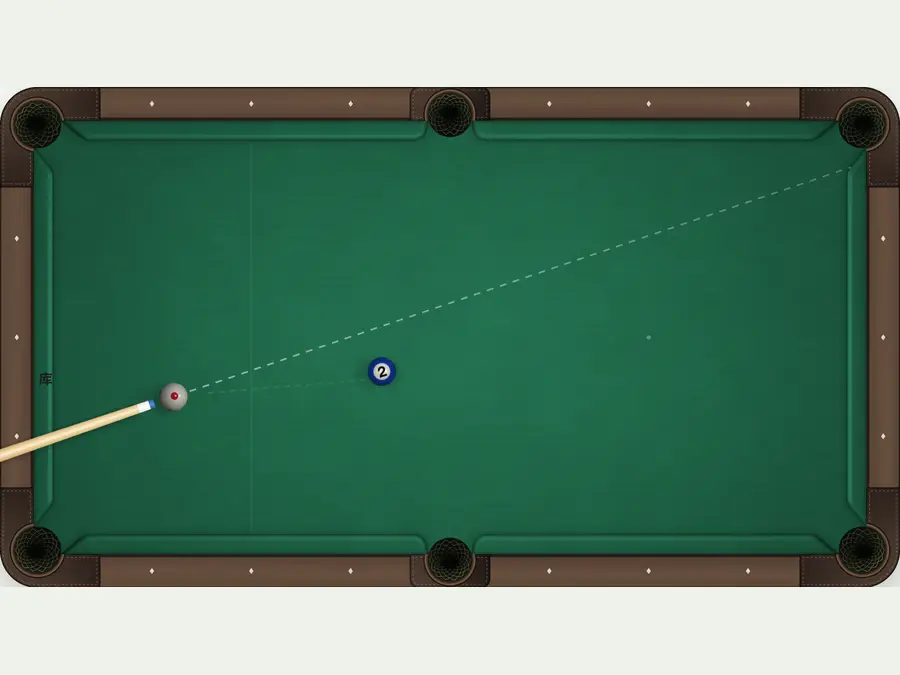
- Cue hits rail
- Cue hits 2
- No later rail
- Cue hits 2
- A ball hits rail
- No object ball drops
Kicking into a legal target is allowed. When no object ball drops, a ball must still reach a rail after that contact.
Last Group Ball and 8 on One Shot
Only the 7 remains in your group. The 7 and 8 drop on one shot with no other foul.
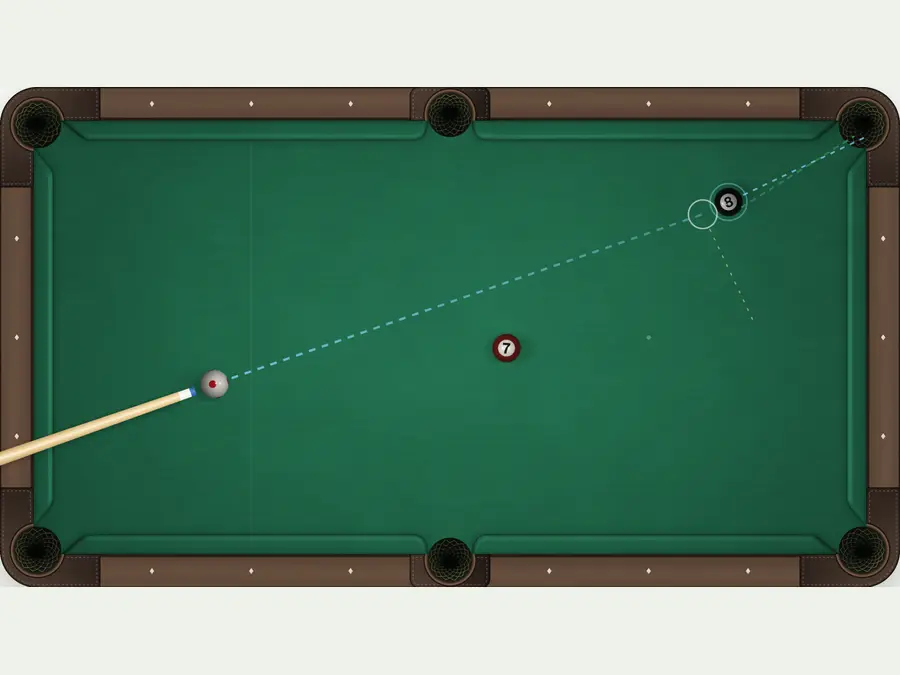
- Cue hits 7
- Both balls drop
- No scratch
- Cue hits 7
- Both balls drop
- No scratch
Pocketing order does not decide this ruling. Chinese 8-ball requires the group to be clear before shooting the 8; this site's American game allows the same-shot finish with legal first contact.
First Contact on a 9-Ball Combination
The 2 is the lowest ball. The 9 drops and the cue ball stays on the table.
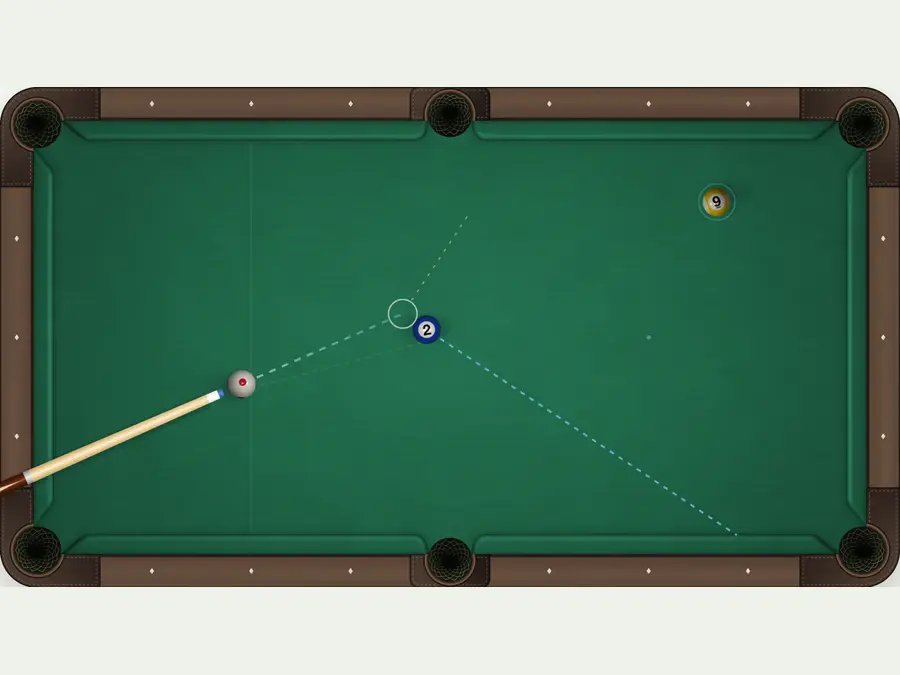
- Cue hits 2
- 2 contacts 9
- 9 drops
- Cue hits 9
- 9 drops
- 2 stays up
The site's 10-ball uses the same combination ruling: hit the lowest ball first and legally pocket the 10 to win. With wrong first contact, spot the pocketed 10 instead.
Site Rules Versus Tournament Rules
AI, local two-player and online games use the same rulings for a given ruleset. The following conventions apply here, not to every pool competition. Agree on the selected game before breaking.
Tournament provisions not used here
None of the four games requires called balls, pockets or safeties. There is no push-out after the break in 9-ball or 10-ball, and no automatic loss for three consecutive fouls.
An 8-ball break foul gives the opponent ball in hand, without a choice to demand a rebreak. After a Chinese 8-ball break foul, placement is behind the head string, but the cue ball need not cross it before contacting an object ball.
The site does not enforce physical-cue double-hit or push-shot penalties and has no referee reracking procedure. This guide explains the browser game, not the full WPA rules.
Use the shot log to check a ruling
On an open table with both groups pocketed, check the first solid or stripe in the shot log to identify the assigned group. A ball already frozen to a rail does not by itself satisfy this shot's rail requirement. When several fouls occur together, the interface may show only one; that does not make the others legal.
Controls and ending a game
There is no Undo control. Center ball resets the strike point, not the shot. New game reracks rather than restoring a previous position. Online, Resign gives the opponent the win; Offer draw requires agreement. Disconnecting does not immediately forfeit, and closing a room is not a resignation.
Rulings FAQ
Do three solids on the break assign my group?
No. Neither 8-ball game assigns groups on the break, regardless of how many balls drop. The first legal scoring shot after the break assigns them.
Group assignmentIs pocketing only my opponent's ball a foul?
Not if first contact and the rest of the shot are legal, but your turn ends and the cue ball stays where it stopped. Legally pocket one of your own on the same shot and you continue.
Continuation rulesDoes a rail before object-ball contact count?
No. On a regular shot with no object ball pocketed, a ball must reach a rail after first contact. An earlier rail cannot replace it.
Rail-contact exampleWhat if my last ball and the 8 drop together?
Chinese 8-ball: loss. This site's American 8-ball: win with legal first contact on your group, all your group balls pocketed and no foul. Pocketing order does not change either ruling.
Same-shot 8-ball exampleDo I lose if I scratch but the 8 stays up?
No automatic loss. The opponent gets ball in hand anywhere. Outside the break, scratching and pocketing the 8 on the same shot loses.
Scratch and loss conditionsMust the lowest ball drop on a winning combination?
No. Hit it first without a foul and pocket the 9 or 10 to win. The number requirement applies to first contact, not pocketing order.
Combination exampleBefore You Shoot
- Check legal first contact.
- Check the pot-or-rail requirement.
- Check the winning-ball conditions.
In 8-ball, plan position from your last group ball onto the 8. Chinese 8-ball requires separate shots; the American same-shot exception is not a substitute for a sound pattern. In rotation, reassess the lowest ball every turn. Use the shot log and the relevant rule to check a disputed result.
Play Pool